
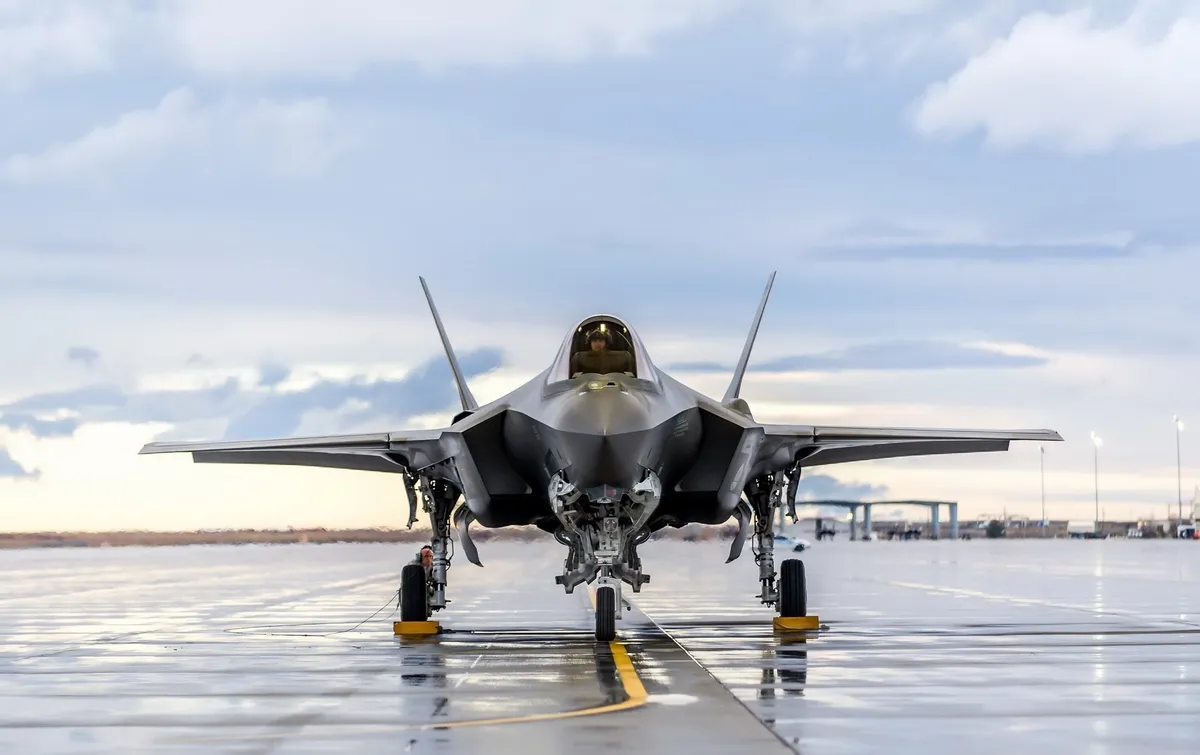
“Germany is reportedly reconsidering its defense procurement strategy, with policymakers examining the possibility of significantly expanding F-35 Lightning II orders while potentially shelving its commitment to a European-developed fighter jet initiative.” This statement reflects a pivotal moment for Germany as it navigates its defense priorities in light of evolving geopolitical landscapes.
The F-35 Lightning II, manufactured by defense contractor Lockheed Martin, represents the Pentagon’s cornerstone fifth-generation combat platform. The aircraft is designed for air superiority, strike operations, intelligence gathering, and electronic warfare, making it a versatile asset for modern air forces.
Germany’s decision to select the F-35A variant to replace its aging Tornado fleet in 2022 marked a significant shift in its defense policy. This choice was influenced by the F-35A’s capability to fulfill NATO’s nuclear-sharing requirements, as it is certified to carry US B61 nuclear bombs, ensuring continuity in that role.
As Germany considers expanding its fleet of F-35 Lightning II aircraft, it raises questions about its previous commitments to the Future Combat Air System (FCAS), a collaborative initiative launched by France, Germany, and Spain aimed at developing next-generation air combat capabilities.
“Germany’s potential pivot away from a pan-European fighter development program in favor of expanded American procurement signals deepening questions about the continent’s independent defense industrial capacity,” analysts note. This shift could have significant implications for European defense collaboration.
A substantial German F-35 expansion would represent a significant financial commitment to American defense manufacturers while potentially disappointing European aerospace partners invested in alternative fighter development. The dynamics of international defense procurement are increasingly complex as nations reassess their strategic needs.
Details remain unconfirmed regarding the exact number of additional F-35s Germany may acquire, but the discussions highlight a broader trend of European nations reevaluating their defense strategies in response to changing security environments.
As NATO continues to emphasize collective defense, the integration of advanced platforms like the F-35 will be crucial for member states. The aircraft’s combat radius of 684 miles and maximum speed of Mach 1.6 enhance its operational flexibility.
In summary, Germany’s ongoing deliberations about its F-35 Lightning II orders reflect a significant moment in European defense policy, with potential ramifications for both transatlantic relations and the future of European military cooperation.
Related Posts

Cognizant’s Layoffs and AI Hiring Strategy
Cognizant plans to lay off up to 15,000 employees globally, impacting traditional IT jobs and creating openings for fresh graduates.
Read out all
Vivo x300 fe price
The Vivo X300 FE is expected to launch at Rs 79,999, a notable increase from the previous model. This smartphone aims to...
Read out all
Love insurance kompany
'Love Insurance Kompany' has experienced a notable decline in box office collections following its second week of release.
Read out all
Gas Prices Surge in Kerala’s Food Sector
Protests erupt in Kerala's food sector following a sharp rise in commercial LPG prices. The price of a 19-kg cylinder has soared...
Read out all
The boys season 5 episode 6 release date
Episode 6 of The Boys Season 5 will debut on May 6, 2026. It will be available on Prime Video and in...

Voltas Faces Rising AC Prices in India
The air conditioner market in India is experiencing significant price increases due to rising raw material costs and upcoming energy efficiency regulations....