
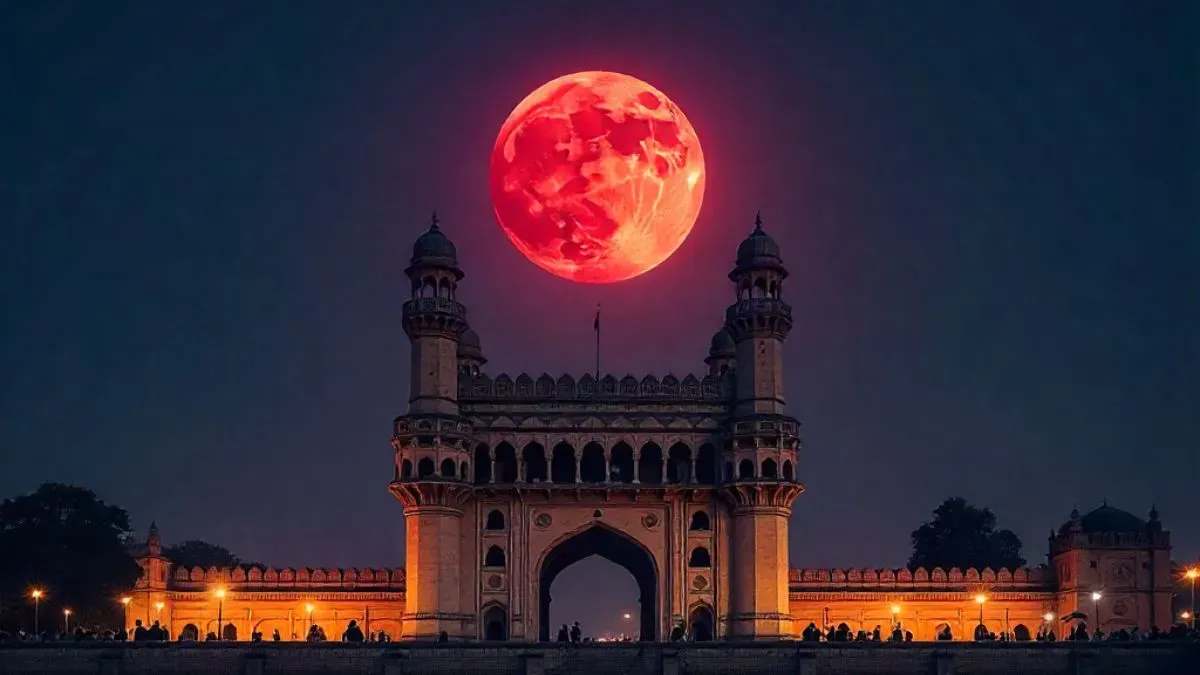
Understanding the Upcoming Chandra Grahan
The anticipation surrounding the Chandra Grahan, or lunar eclipse, on March 3, 2026, has been building among astronomy enthusiasts and the general public alike. Traditionally, lunar eclipses have been significant events, often associated with cultural practices and beliefs. Prior to this development, many were aware of the general timings for lunar eclipses but lacked specific details for this particular event.
Key Timings for the Lunar Eclipse
As the date approaches, the precise timings for the various phases of the Chandra Grahan have been confirmed. Sutak Kaal, a period of preparation and abstention, will commence at 6:20 AM on March 3, 2026. This will be followed by the penumbral phase of the eclipse beginning at 2:14 PM, marking the start of the event. The partial eclipse phase will begin shortly after at 3:30 PM, leading into totality at 4:58 PM.
Significant Phases of the Eclipse
During this lunar eclipse, the maximum eclipse will occur at 5:25 PM, a moment when the Earth’s shadow completely covers the Moon. This totality will last until 5:32 PM, after which the partial eclipse will continue until 6:47 PM, and the penumbral phase will conclude at 7:53 PM. The timing of these phases is crucial for observers hoping to witness the various stages of the eclipse.
Cultural Context and Observations
This particular lunar eclipse is noteworthy not only for its astronomical significance but also because it coincides with the festival of Holi, a time of celebration in India. The northeastern states of India are expected to have the most dramatic views of the eclipse, making it a unique opportunity for both spiritual and scientific observation.
Expert Insights on the Eclipse
Experts in astronomy have noted that lunar eclipses, such as the one occurring on March 3, 2026, provide valuable opportunities for education and public engagement with science. The event serves as a reminder of the intricate dance between the Earth, Moon, and Sun, and the natural phenomena that can be observed from our planet. The term ‘Grastodaya’ refers to a lunar eclipse where the Moon rises already eclipsed, adding another layer of interest for observers.
Conclusion and Future Implications
As the date draws nearer, the excitement surrounding the Chandra Grahan continues to grow. With the confirmed timings and the cultural significance of the event, many are preparing to witness this celestial occurrence. Details remain unconfirmed regarding any additional events or activities planned around the eclipse, but the focus remains on the astronomical spectacle itself.
Related Posts

JSW Energy Share Price: Recent Developments and Future Outlook
JSW Energy's share price has seen fluctuations amid changing market conditions. Recent ratings and projections indicate potential growth.

Giraffe 1x radar: Giraffe-1X Radar Incident at US Embassy in Baghdad
An unidentified kamikaze drone struck a Giraffe-1X radar station at the US embassy in Baghdad, highlighting vulnerabilities in air defense systems.
16 मार्च 2026 का राशिफल: Horoscope for March 16, 2026
On March 16, 2026, individuals under the signs of Aries, Taurus, and Capricorn may find opportunities to leverage their skills effectively.

Gudi Padwa 2026: Celebrating the Marathi New Year
Gudi Padwa 2026, celebrated on March 19, signifies the Marathi New Year and embodies themes of new beginnings and prosperity.

ICMR Initiates CardioWatch India Project Amid Rising Public Health Concerns in Assam
The ICMR is funding a significant project aimed at cardiovascular disease research, coinciding with alarming bee sting fatalities in Assam.

Shab e Qadr Observance in Jammu and Kashmir
Shab e Qadr, a night of profound spiritual significance, faced restrictions in Jammu and Kashmir this year. The closure of mosques and...