
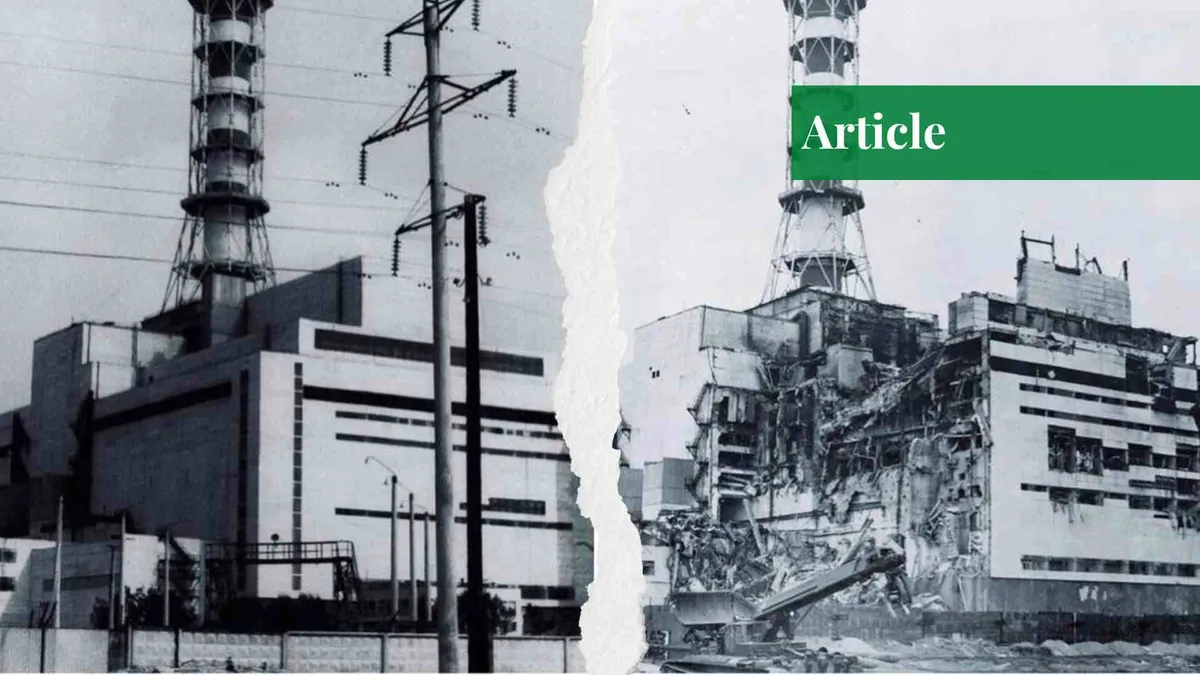
The Impact of Chernobyl: A Legacy of Resilience
The Chernobyl disaster, which occurred in 1986, remains one of the most catastrophic nuclear accidents in history, with lasting repercussions that extend far beyond its immediate aftermath. The incident has left a profound mark on individuals like Oksana Masters, who was born with several birth defects linked to her birth mother’s proximity to the disaster site.
Oksana Masters was born with six toes, webbed hands, and missing several organs, including one kidney. These conditions are believed to be a direct result of radiation exposure in the area surrounding Chernobyl. Masters, who was adopted by a professor at the University at Buffalo in New York, faced significant challenges from an early age. By the age of 10, she became a double amputee after surgery to remove her impaired left leg.
Despite these adversities, Oksana Masters found her path to success in sports. She won her first Paralympic medal, a bronze, in adaptive rowing in 2012, showcasing her determination and resilience. Her achievements continued to grow, culminating in gold medals in cross-country skiing at the 2018 Winter Paralympics in PyeongChang, South Korea. “They linked it to Chernobyl because I was really not that far from there, and the fact that radiation levels continued to rise years after the explosion,” Masters stated, reflecting on her unique journey.
While the Chernobyl disaster is often discussed in terms of its immediate human toll and environmental impact, it is essential to recognize the ongoing legacy it has created. The incident has shaped discussions around nuclear safety and energy policies worldwide. For instance, the Fukushima disaster, which occurred on March 11, 2011, serves as a reminder of the potential dangers associated with nuclear energy. Triggered by a 9.0 magnitude earthquake and tsunami, the Fukushima Daiichi nuclear power plant experienced three reactor meltdowns and explosions, resulting in a total cost of $119 billion for dismantlement and compensation.
In the wake of Fukushima, the Japanese government took significant steps, including nationalizing the Tokyo Electric Power Company (TEPCO) in 2012 to address reparations. The nuclear exclusion zone around Fukushima covers an area of 444 square miles, highlighting the extensive impact of the disaster on local communities and the environment. As Japan grapples with its energy future, experts emphasize the need to learn from the lessons of Fukushima and gradually reduce dependency on nuclear energy. “Japan has to learn from the lessons of Fukushima and gradually reduce its dependency on this energy,” noted Tatsujiro Suzuki, a prominent voice in the energy debate.
Oksana Masters’ story is a testament to the resilience of those affected by the Chernobyl disaster. “I don’t want to say I was a product of it [the Chernobyl disaster] but, out of something horrific, it’s about how you can see the potential and possibilities – like becoming an athlete – instead of dwelling on it,” she remarked, illustrating her perspective on overcoming adversity.
The Chernobyl disaster and its aftermath continue to resonate in discussions about nuclear energy and safety. As the world reflects on these events, the stories of individuals like Oksana Masters remind us of the human cost of such tragedies and the enduring spirit of resilience in the face of hardship. Details remain unconfirmed regarding the full extent of the long-term effects of radiation exposure on future generations, but the conversation surrounding Chernobyl and its legacy is far from over.
Related Posts
Ichthyotitan severnensis discovery
The recent discovery of Ichthyotitan severnensis, a new species of marine reptile, has significant implications for our understanding of the Triassic oceans.
NASA Satellite Crashes: Van Allen Probe A Reenters Atmosphere
NASA's Van Allen Probe A has crashed back to Earth after an extended mission, raising concerns about space debris and satellite management.
NASA Satellite Crashing: Van Allen Probe A Reenters Earth
The Van Allen Probe A has crashed back to Earth after nearly 14 years in orbit, monitored by NASA and the U.S....
Read out all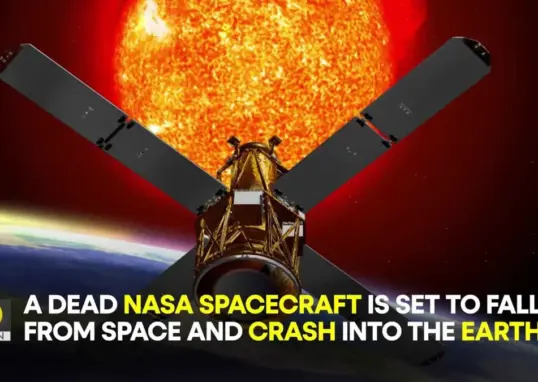
NASA Satellite Crash: Van Allen Probe A Set to Re-Enter Earth’s Atmosphere
The Van Allen Probe A satellite is predicted to re-enter Earth's atmosphere on March 10, 2026, after 14 years of operation. NASA...
Read out all
Project hail mary
Project Hail Mary, directed by Phil Lord and Christopher Miller, is a film adaptation of Andy Weir's novel, featuring Ryan Gosling as...

Nukes: Recent Developments in : Iran’s Isfahan Site Struck
Iran's Isfahan nuclear site has been struck, raising concerns about the implications for nuclear proliferation in the region. The current state of...