
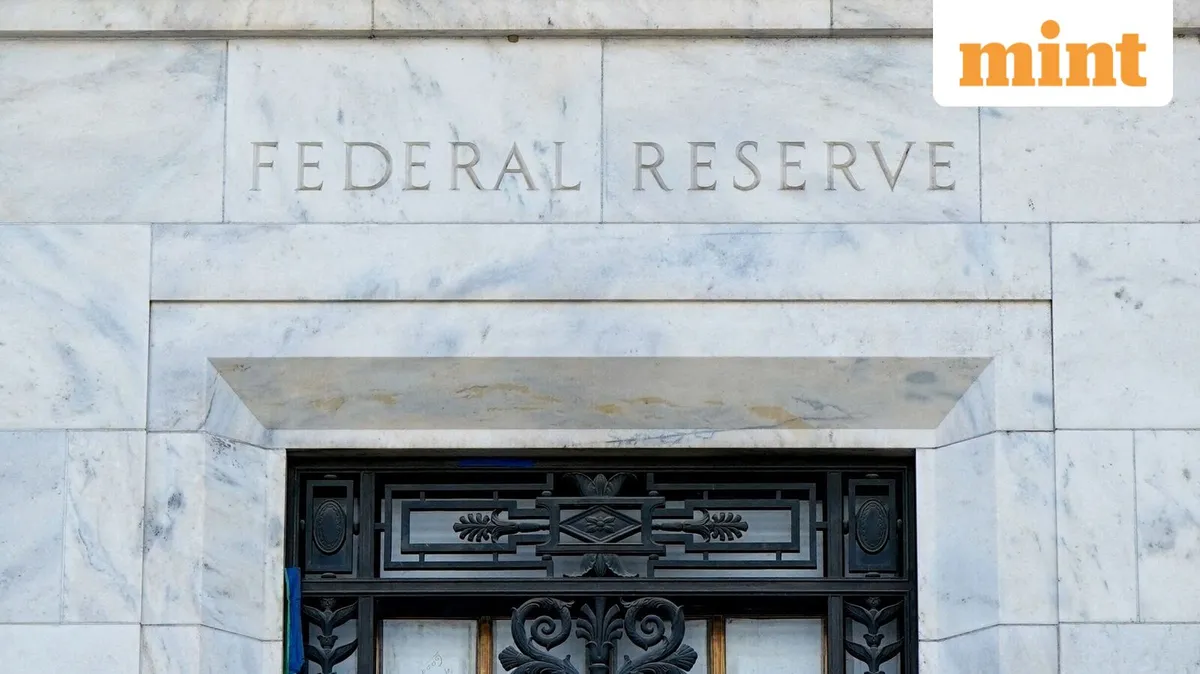
“The implications of developments in the Middle East for the US economy are uncertain,” stated the Federal Reserve following its latest meeting. This remark encapsulates the cautious stance the Fed is taking as it navigates a complex economic landscape marked by rising inflation and geopolitical tensions.
On March 18, 2026, the US Federal Reserve decided to maintain its benchmark interest rate in a range of 3.5% to 3.75% for the second consecutive time. The Federal Open Market Committee voted 11-1 to hold the federal funds rate steady, with Governor Stephen Miran dissenting, advocating for a quarter-point reduction.
The decision comes as policymakers anticipate one quarter-point rate cut in both 2026 and 2027, reflecting a cautious approach to monetary policy amid evolving economic conditions. The Fed has raised its inflation outlook for 2026 to 2.7%, up from a previous estimate of 2.4%, indicating a recognition of the pressures that higher energy prices are exerting on the economy.
Despite these inflationary pressures, the unemployment forecast remains unchanged at 4.4% for the end of 2026. This stability in the labor market contrasts with the volatility seen in the stock market, where US stocks sold off following the Fed’s decision. The Dow Jones Industrial Average fell by 1.3%, while both the S&P 500 and Nasdaq experienced a decline of 1%.
Jerome Powell, the Fed Chair, noted, “In the near term, higher energy prices will push up overall inflation, but it is too soon to determine the scope and duration of the potential effects on the economy.” His remarks highlight the Fed’s ongoing assessment of how external factors, particularly the situation in the Middle East, could influence domestic economic conditions.
Policymakers have acknowledged that economic activity has been expanding at a solid pace, despite the elevated inflation levels. However, the uncertainty surrounding the implications of geopolitical developments remains a significant concern. As Powell further elaborated, “Near term measures of inflation expectations have risen in recent weeks, likely reflecting the substantial rise in oil prices caused by the supply disruptions in the Middle East.”
What observers say
As the Fed continues to monitor these developments, the exact timing of the expected rate cuts in 2026 and 2027 is unclear. Additionally, the long-term implications of the Middle East conflict on US inflation and economic growth remain uncertain. Details remain unconfirmed, leaving analysts and investors alike to speculate on the Fed’s next moves in this unpredictable economic environment.
Related Posts

Vivo x300 fe price
The Vivo X300 FE is expected to launch at Rs 79,999, a notable increase from the previous model. This smartphone aims to...
Read out all
Gold prices drop amid rising platinum rates
Gold prices in Bengaluru have decreased, offering a reprieve to buyers as platinum rates rise. This shift impacts 22K, 24K, and 18K...
Read out all
Stock market crash
The stock market is under pressure from geopolitical tensions and economic indicators, raising fears of a crash. Crude oil prices have surged...
Read out all
Loan Trends in India: CSB Bank Shifts Focus to SME Lending
CSB Bank has significantly reduced its gold loan disbursement and is now focusing on SME lending. This shift reflects the bank's response...
Read out all
Jamie Dimon calls for management reform
Jamie Dimon calls for a radical shift in management practices, urging companies to eliminate bureaucratic layers to enhance efficiency.
Read out all
Petroleum Prices Set to Rise in India Amid Soaring Crude Oil Costs
Indian oil marketing companies are on the brink of raising petrol and diesel prices due to significant financial losses from soaring crude...
Read out all