
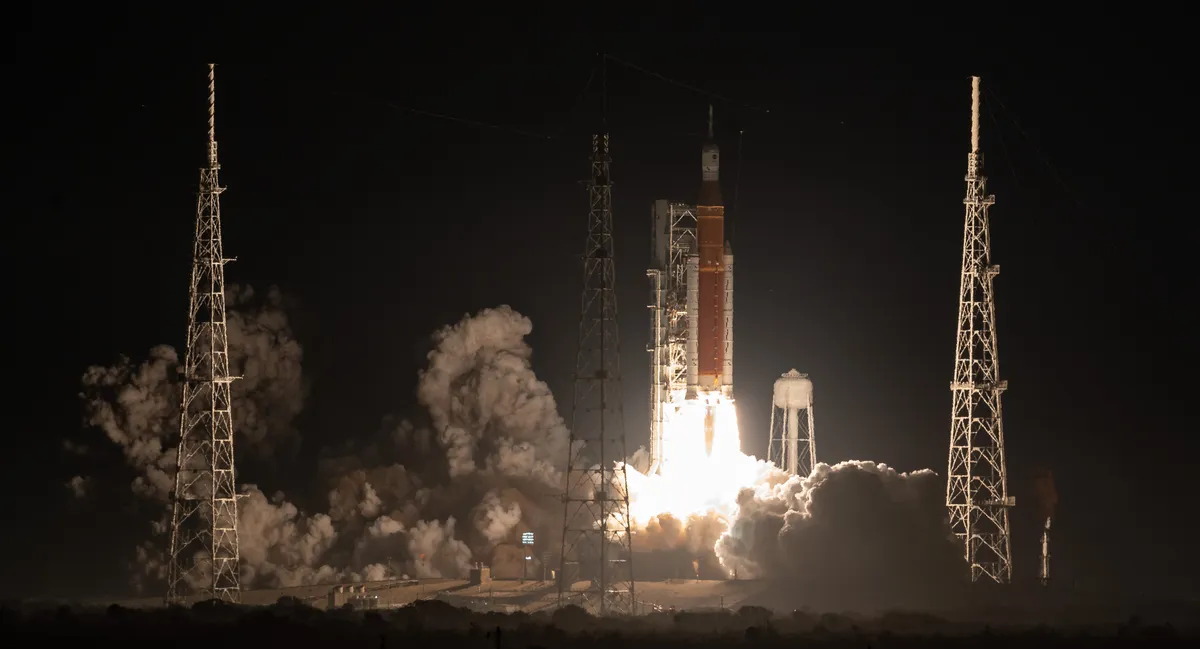
The upcoming NASA Artemis II mission, scheduled to launch on April 1, 2026, represents a significant milestone as it will be the first crewed mission in NASA’s Artemis program. This mission is poised to perform a lunar flyby and return to Earth without landing on the Moon, marking the first human spaceflight beyond low Earth orbit since Apollo 17 in 1972.
The crew for Artemis II consists of four astronauts: Reid Wiseman, Victor Glover, Christina Koch, and Jeremy Hansen. This mission will also be historic as it includes the first time a woman, a person of colour, and a non-American astronaut will travel to the Moon.
NASA’s Artemis II mission will utilize the Space Launch System (SLS) rocket and the Orion spacecraft, with a mission duration of approximately 10 days. During this time, the spacecraft will reach a re-entry speed of 40,000 kilometers per hour upon returning to Earth.
NASA has emphasized the importance of precision and risk management, especially given the agency’s history of spaceflight tragedies. The Artemis II mission carries inherent risks, including untested life support systems and potential solar radiation exposure, which could pose challenges during the flight.
NASA’s long-term vision for the Artemis program includes building infrastructure near the lunar South Pole, which is expected to facilitate future lunar exploration and possibly serve as a stepping stone for missions to Mars.
Despite the excitement surrounding Artemis II, the mission has faced delays and rising costs, with NASA relying on private companies for various components. The agency has stated that it does not plan to perform another wet dress rehearsal (WDR), which means there are fewer boxes to check during this second stint at the pad.
Details remain unconfirmed regarding the launch date, as potential technical issues could arise. Additionally, the effectiveness of the untested life support system during the mission is uncertain, and the impact of increased solar activity on the mission remains unclear.
NASA aims for Artemis II to recreate the sense of global unity sparked by Apollo 8, as the agency prepares to send humans back towards the Moon with this ambitious mission.
As the launch date approaches, the space community and the public are eagerly awaiting further developments regarding this landmark mission.
Related Posts
Rainbow clouds
An iridescent cloud phenomenon in Bogor, Indonesia, has captured public attention. The event highlights the beauty of atmospheric optics.

El Niño Strengthens, Jakarta BPBD Urges Fire Safety
The Jakarta BPBD has issued an urgent warning to residents about increased fire risks linked to the strengthening El Niño phenomenon. They...
Read out all
Hantavirus infections cruise ship
A suspected hantavirus outbreak on a cruise ship has led to three deaths and several illnesses. The incident raises public health concerns...

Air pollution: Shahid Smriti Van Reduces in Surat
Shahid Smriti Van is an urban ecological restoration project in Surat that significantly reduces air pollution. The initiative has garnered national recognition...

Solar Eclipse
The longest solar eclipse of the century will take place on August 2, 2027. It will last for an impressive 6 minutes...
Read out all
Agriculture Festival Organized by Union Agriculture Minister
The Agriculture Festival will take place from April 11 to 13 in Raisen, led by the Union Agriculture Minister. ICAR-IARI will hold...
Read out all