

Breaking Development
On 10 March 2026, significant developments emerged regarding national security and fertility rates, particularly in the context of ongoing tensions involving Iran, the United States, and Israel. Iran has demonstrated its capacity for strategic retaliation by striking targets previously considered safe, raising concerns about regional stability.
Immediate Circumstances
The closure of the Strait of Hormuz has disrupted global oil transportation, creating serious concerns for global energy security. This conflict has exposed structural weaknesses in the Gulf’s long-standing security framework, leading to questions about the credibility of external protection systems, particularly the United States’ ability to shield its allies.
In India, the demographic landscape is shifting, with Andhra Pradesh reporting a Total Fertility Rate (TFR) of approximately 1.4, significantly below the replacement level of 2.1. Meanwhile, Sikkim has the lowest TFR in India at about 1.1, prompting the state to introduce financial incentives for government employees to encourage larger families. However, experts note that financial incentives alone have limited impact on reversing declining fertility rates.
Countries like Singapore and South Korea have implemented pro-natalist policies but have not significantly raised their fertility rates, indicating that structural factors such as urbanization and career priorities play a crucial role in reproductive decisions. Ultimately, the decision to have children is often influenced more by a family’s confidence in its economic future and social stability than by financial incentives.
Officials have emphasized that national security cannot be permanently outsourced, highlighting the need for strong domestic capabilities. The ongoing conflict illustrates the importance of self-reliance in defense, as the Kargil War of 1999 previously exposed critical shortages in India’s military capabilities due to reliance on imports.
As India continues to expand its defense exports and reduce import dependency, the proposal from Andhra Pradesh reflects growing concern about the country’s long-term demographic trajectory. The situation remains fluid, and details regarding the implications of these developments are still unfolding.
Related Posts

Amritsar news: Two explosions occur near military installations in Punjab
Two low-intensity explosions occurred near military installations in Punjab, raising security concerns. Investigations are underway by local authorities.
Read out all
Mullanpur Hosts IPL 2026 Playoffs After Venue Shift
The IPL 2026 final venue has been moved from Bengaluru to Ahmedabad. This change comes amid local association requirements surpassing BCCI's guidelines.
Read out all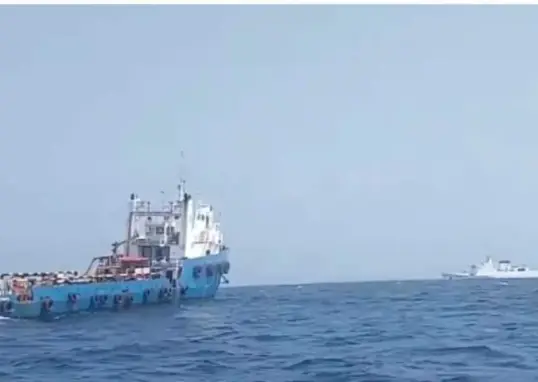
Pakistan Navy
The Pakistan Navy provided humanitarian aid to an Indian vessel in distress, showcasing cross-border cooperation. This incident highlights maritime safety efforts.

Tamil Nadu Assembly Elections 2026: Thalapathy Vijay’s TVK Emerges as the Largest Party
Thalapathy Vijay's party, TVK, has emerged as the single largest party in the 2026 Tamil Nadu Assembly Elections, reshaping local politics.
Read out all
Kashmira pardeshi: Suvinder Vicky redefines alpha with
Suvinder Vicky redefines being an alpha by prioritizing family responsibility over traditional power dynamics. His new show, Glory, explores boxing and family...
Read out all
Offs: Tata Tech’s Profit Margins Dip Despite Growth in Q4
Tata Technologies reported an 8% profit increase in Q4, but margins contracted year-over-year due to one-off factors. Management remains optimistic about future...
Read out all