
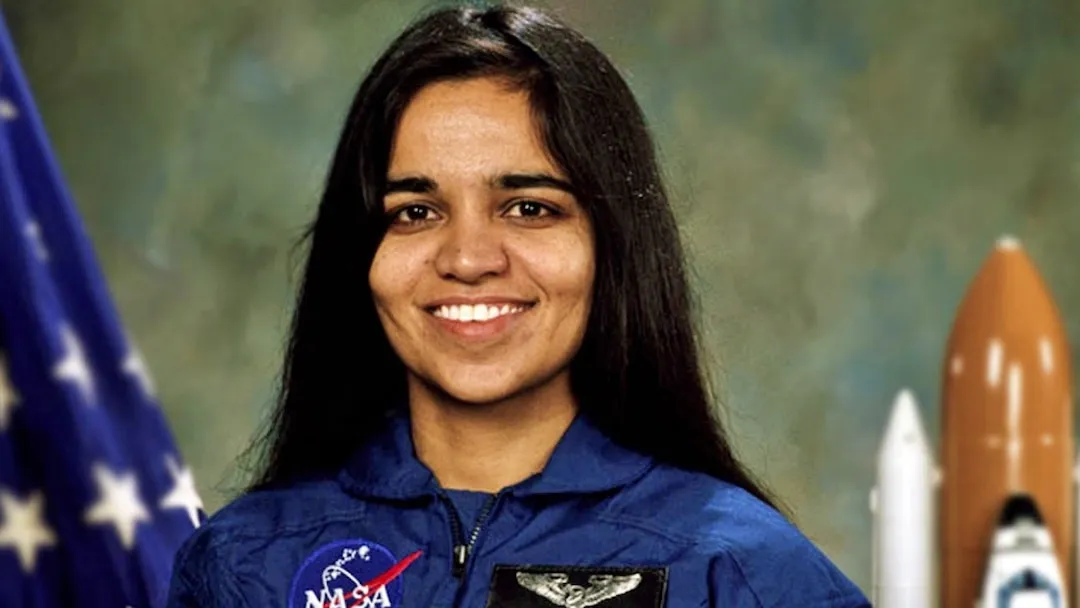
“Kalpana, we are proud of you. You have built a strong bridge between India and America. I want a promise from you, when you return from space, come to India with your entire crew and family.” These words from Indian Prime Minister Inder Kumar Gujral resonated with millions as Kalpana Chawla embarked on her historic journey into space aboard the STS-87 mission on November 19, 1997.
Kalpana Chawla, born on March 17, 1962, in Karnal, Haryana, India, became the first woman of Indian origin to travel to space. Her journey was not just a personal achievement but a significant milestone for India, symbolizing the potential of women in science and technology. The STS-87 mission lasted over 15 days and focused on various scientific experiments, including studies on microgravity, which are crucial for understanding the effects of space on biological systems.
Prior to her spaceflight, Chawla’s academic journey was marked by groundbreaking achievements. She was the first woman to study Aeronautical Engineering at Punjab Engineering College, later obtaining her Master’s degree in aerospace engineering from the University of Texas in 1984, followed by a doctorate from the University of Colorado in 1988. Her dedication and hard work paved the way for her eventual selection by NASA, where she became a symbol of aspiration for many.
During her mission, Chawla’s accomplishments were celebrated not only in the United States but also in her home country. Gujral’s congratulatory call highlighted the pride and joy that her achievement brought to India. It was a moment that bridged two nations through the shared excitement of space exploration.
Chawla’s journey, however, was tragically cut short. She died in the Space Shuttle Columbia disaster on February 1, 2003, during her second spaceflight. Her legacy, however, continues to inspire future generations of scientists and engineers, particularly women who aspire to break barriers in fields traditionally dominated by men.
Chawla once said, “Do something because you really want to do it. If you’re doing it just for the goal and don’t enjoy the path, then I think you’re cheating yourself.” This philosophy guided her throughout her life and career, encouraging countless individuals to pursue their passions relentlessly.
What observers say
Her contributions to space science and her role as a pioneer for women in STEM fields have been recognized globally. Chawla’s journey from Karnal to NASA symbolizes ambition and courage in human exploration. Her story is a testament to the power of dreams and the importance of perseverance.
As we reflect on her legacy, it is clear that Kalpana Chawla not only made history but also inspired a future where the sky is not the limit for aspiring astronauts and engineers. Her life serves as a reminder that the path from dreams to success does exist, and it is up to each individual to find the vision, courage, and perseverance to follow it.
Related Posts
Rainbow clouds
An iridescent cloud phenomenon in Bogor, Indonesia, has captured public attention. The event highlights the beauty of atmospheric optics.

El Niño Strengthens, Jakarta BPBD Urges Fire Safety
The Jakarta BPBD has issued an urgent warning to residents about increased fire risks linked to the strengthening El Niño phenomenon. They...
Read out all
Hantavirus infections cruise ship
A suspected hantavirus outbreak on a cruise ship has led to three deaths and several illnesses. The incident raises public health concerns...

Air pollution: Shahid Smriti Van Reduces in Surat
Shahid Smriti Van is an urban ecological restoration project in Surat that significantly reduces air pollution. The initiative has garnered national recognition...

Solar Eclipse
The longest solar eclipse of the century will take place on August 2, 2027. It will last for an impressive 6 minutes...
Read out all
Agriculture Festival Organized by Union Agriculture Minister
The Agriculture Festival will take place from April 11 to 13 in Raisen, led by the Union Agriculture Minister. ICAR-IARI will hold...
Read out all