

What are the implications of Thailand’s recent confirmation of three deaths from a vessel attacked in the Strait of Hormuz? This tragic incident underscores the ongoing maritime security challenges in a region critical for global trade and energy transport.
According to reports, the attack on the Thai-flagged vessel occurred last month, resulting in the loss of three crew members. Sihasak Phuangketkeow, a representative from Thailand, stated, “The three crewmen on the Thai-flagged vessel that was attacked in the Strait of Hormuz last month have died.” Fortunately, 20 crew members were rescued by the Omani navy following the attack, highlighting the ongoing risks faced by vessels in this vital shipping lane.
The Strait of Hormuz is a strategic chokepoint for global oil shipments, with approximately one-fifth of the world’s oil passing through it. The incident involving the Thai vessel raises questions about the safety of maritime routes in the region, particularly as tensions continue to simmer among various nations, including Iran and the United States.
In a broader context, Thailand has been strengthening its international relationships, particularly with India. In April 2025, the two nations elevated their ties to a ‘strategic partnership,’ reflecting their shared interests in economic and technological cooperation. This partnership is particularly relevant as Thailand ranks second after India in semiconductor manufacturing among emerging economies.
Thailand’s semiconductor market is projected to mobilize more than 2.5 trillion baht (approximately US$81 billion) in investment by 2050. This ambitious goal is part of Thailand’s draft National Semiconductor Roadmap 2050, which aims to position the country as a technology-owning chip producer. In comparison, India’s semiconductor market was estimated to be about US$50 billion in 2024-25, indicating the growing significance of this sector in both nations.
Historically, India and Thailand share over two millennia of cultural and commercial contact, which has laid the groundwork for their current strategic partnership. The peoples of western Southeast Asia have long viewed themselves as part of Bharatavarsa, representing a significant instance of large-scale acculturation in history, as noted by Paul Wheatley.
As Thailand navigates the aftermath of the vessel attack, the focus will likely shift to enhancing maritime security and ensuring the safety of its shipping interests in the region. Details remain unconfirmed regarding the full circumstances of the attack and the identities of those responsible, leaving many questions unanswered about the future of maritime operations in the Strait of Hormuz.
Related Posts

Amritsar news: Two explosions occur near military installations in Punjab
Two low-intensity explosions occurred near military installations in Punjab, raising security concerns. Investigations are underway by local authorities.
Read out all
Mullanpur Hosts IPL 2026 Playoffs After Venue Shift
The IPL 2026 final venue has been moved from Bengaluru to Ahmedabad. This change comes amid local association requirements surpassing BCCI's guidelines.
Read out all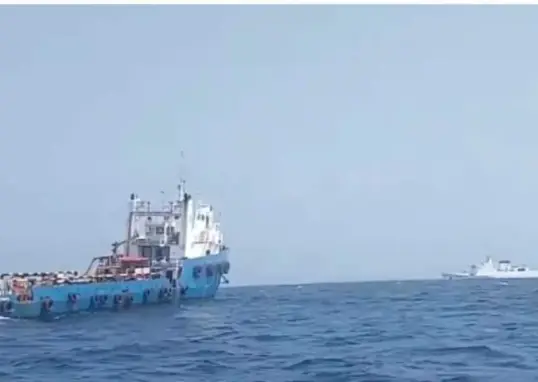
Pakistan Navy
The Pakistan Navy provided humanitarian aid to an Indian vessel in distress, showcasing cross-border cooperation. This incident highlights maritime safety efforts.

Tamil Nadu Assembly Elections 2026: Thalapathy Vijay’s TVK Emerges as the Largest Party
Thalapathy Vijay's party, TVK, has emerged as the single largest party in the 2026 Tamil Nadu Assembly Elections, reshaping local politics.
Read out all
Kashmira pardeshi: Suvinder Vicky redefines alpha with
Suvinder Vicky redefines being an alpha by prioritizing family responsibility over traditional power dynamics. His new show, Glory, explores boxing and family...
Read out all
Offs: Tata Tech’s Profit Margins Dip Despite Growth in Q4
Tata Technologies reported an 8% profit increase in Q4, but margins contracted year-over-year due to one-off factors. Management remains optimistic about future...
Read out all