
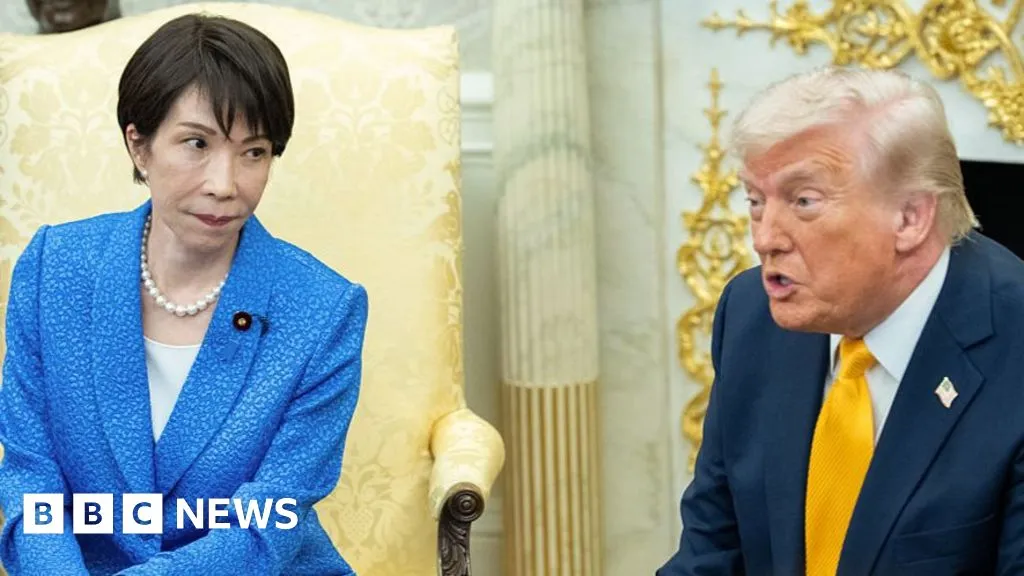
Before recent developments, the narrative surrounding military actions and international relations was largely focused on strategic alliances and diplomatic communications. The expectation was that leaders would prioritize transparency and collaboration, particularly in sensitive matters involving military strikes.
However, a decisive moment occurred when Donald Trump, during a meeting with Japan’s first female prime minister, Sanae Takaichi, made a controversial remark comparing US strikes on Iran to Japan’s attack on Pearl Harbor. This comparison, which drew on historical context, was unexpected and sparked immediate reactions.
The Pearl Harbor attack, which took place on December 7, 1941, resulted in the deaths of more than 2,400 Americans and led to the United States’ entry into World War II. Trump’s reference to this pivotal moment in history was made in response to a question about the lack of communication with allies regarding military actions.
Trump stated, “Why didn’t you tell me about Pearl Harbor?” and followed with, “Who knows better about surprise than Japan?” These comments were made in a light-hearted tone, but they raised eyebrows and prompted discussions about the appropriateness of such historical comparisons in contemporary political discourse.
Takaichi’s reaction to Trump’s remarks quickly went viral on social media, highlighting the mixed responses to his comments. While Trump praised her command of English during the meeting, the juxtaposition of a historical tragedy with current military strategy was not lost on observers.
Experts have weighed in on the implications of Trump’s remarks, noting that such comparisons can trivialize significant historical events. The Pearl Harbor attack is a sensitive subject in both American and Japanese history, and drawing parallels to modern military actions may evoke strong emotions.
In the wake of Trump’s comments, discussions surrounding military transparency and the importance of historical context in political dialogue have intensified. As nations navigate complex international relationships, the need for careful communication becomes even more critical.
Details remain unconfirmed regarding the broader implications of Trump’s remarks on US-Iran relations and Japan’s diplomatic stance. The situation continues to evolve, with analysts closely monitoring the reactions from both domestic and international audiences.
Related Posts

Amritsar news: Two explosions occur near military installations in Punjab
Two low-intensity explosions occurred near military installations in Punjab, raising security concerns. Investigations are underway by local authorities.
Read out all
Mullanpur Hosts IPL 2026 Playoffs After Venue Shift
The IPL 2026 final venue has been moved from Bengaluru to Ahmedabad. This change comes amid local association requirements surpassing BCCI's guidelines.
Read out all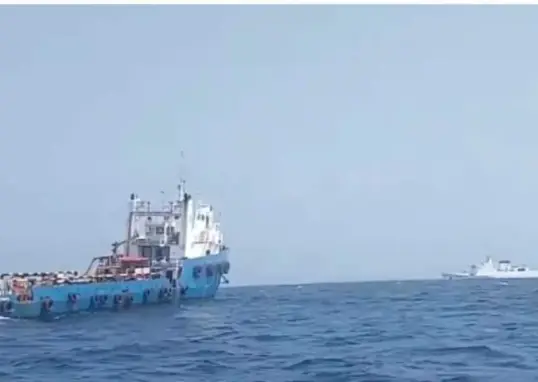
Pakistan Navy
The Pakistan Navy provided humanitarian aid to an Indian vessel in distress, showcasing cross-border cooperation. This incident highlights maritime safety efforts.

Tamil Nadu Assembly Elections 2026: Thalapathy Vijay’s TVK Emerges as the Largest Party
Thalapathy Vijay's party, TVK, has emerged as the single largest party in the 2026 Tamil Nadu Assembly Elections, reshaping local politics.
Read out all
Kashmira pardeshi: Suvinder Vicky redefines alpha with
Suvinder Vicky redefines being an alpha by prioritizing family responsibility over traditional power dynamics. His new show, Glory, explores boxing and family...
Read out all
Offs: Tata Tech’s Profit Margins Dip Despite Growth in Q4
Tata Technologies reported an 8% profit increase in Q4, but margins contracted year-over-year due to one-off factors. Management remains optimistic about future...
Read out all