
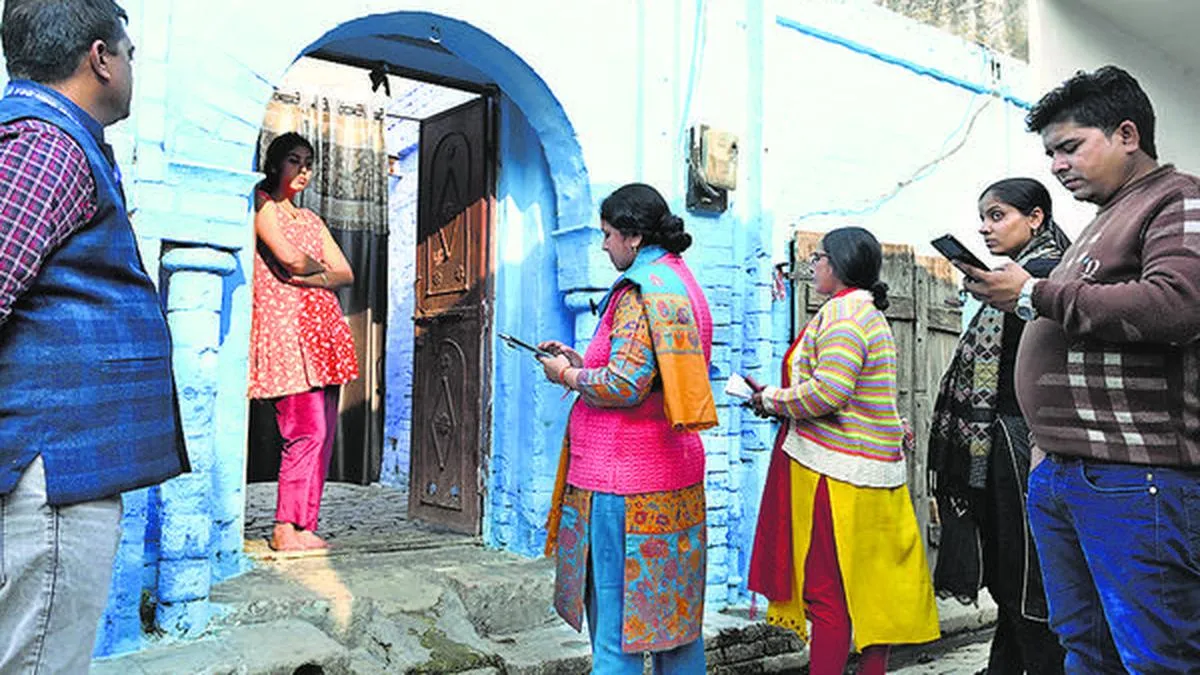
What does Census 2027 signify for India? It marks a pivotal shift as the country prepares for its first fully digital population census, set to begin on April 1, 2026. This census will be conducted in two phases: House Listing and Population Enumeration, with the latter scheduled for February 2027.
The first phase will consist of 33 questions, covering various aspects of household demographics, including the sex of the head of the household and the type of cereal consumed. The Registrar General and Census Commissioner of India emphasized the importance of accurate data collection, stating, “Citizens are urged to provide accurate information to surveyors, as the data determines the quality of planning for education, health, housing, and infrastructure for the next decade.”
For the first time since 1931, Census 2027 will include caste enumeration, a significant development in India’s demographic data collection. The government has approved an outlay of over ₹11,718 crore for this initiative, reflecting its commitment to a comprehensive and modern approach to census-taking.
With a projected population coverage of 1.4 billion, the census will involve approximately 3.2 million field personnel. The self-enumeration portal will be accessible in 16 languages, making it easier for citizens to participate in the process.
The Registrar General noted, “Census 2027 is not a rescheduled count. It is a complete re-engineering of the enumeration process.” This digital transformation aims to collect, validate, and process data in near real-time, enhancing the efficiency and accuracy of the census.
The previous census, scheduled for 2021, was postponed primarily due to the COVID-19 pandemic, leading to increased anticipation for the upcoming enumeration. As the nation gears up for this significant event, the focus remains on ensuring that every citizen is counted accurately.
As the start date approaches, further details regarding the implementation and participation processes are expected to be clarified. However, uncertainties remain about how the digital transition will affect data collection and public engagement.
Related Posts
Governance
The DMK raises concerns about the lack of anti-incumbency in BJP-ruled states. They highlight issues affecting opposition parties.
Read out all
Aktu admit card
The AKTU 2026 admit cards are now available for download ahead of the upcoming examinations. Candidates must carry them for entry.
Read out all
Haryana Board of School Education
Madhya Pradesh's education department is set to approve a distinct transfer policy, addressing past issues. This change impacts the education sector significantly.

Us iran news
Trump has paused the 'Project Freedom' operation, indicating possible advancements in US-Iran negotiations amidst rising tensions in the Strait of Hormuz.

Cv shanmugam and internal dissent in AIADMK
Internal dissent within the AIADMK is escalating as a faction of MLAs considers backing Vijay's TVK for government formation. CV Shanmugam plays...
Cbse exam, class 12
The CBSE Class 12 exam results will be announced in May 2026. This year, the evaluation process includes On-Screen Marking for the...
Read out all